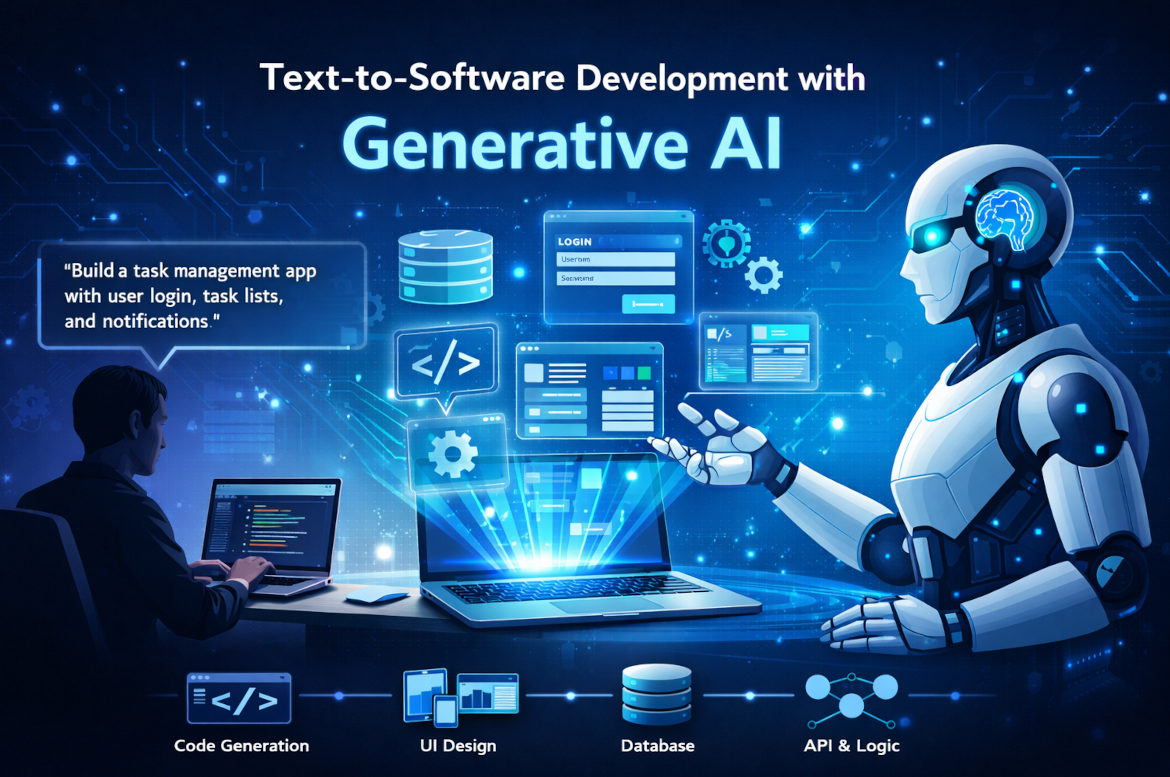
Imagine building a full web app, a mobile game prototype, or even a little SaaS tool... without typing almost any actual code. You just talk (or type) what you want, hit enter, watch the magic happen, accept everything, run it, see it break, yell at the AI in plain English, and somehow — most of the time — it comes back together.
That, my friends, is vibe coding.
The term exploded in early 2025 when Andrej Karpathy (yes, that Andrej Karpathy — OpenAI co-founder, former Tesla AI director, eternal tinkerer) dropped a tweet that basically broke the internet for developers:
"There's a new kind of coding I call 'vibe coding', where you fully give in to the vibes, embrace exponentials, and forget that the code even exists."
He described using tools like Cursor Composer + Claude 3.5 Sonnet (or whatever the frontier model was at the time), voice dictation via SuperWhisper, blindly accepting all diffs, pasting error messages without explanation, and letting the codebase grow way beyond what he could comfortably read. For throwaway weekend projects? Shockingly effective and honestly kind of hilarious.
It's March 2026 now, and vibe coding has matured from meme →

Typical vibe coding session in 2026:
You never really read the code. You feel it. You vibe with it.
It's the closest thing we've had to "programming by thought" since... well, ever.
Not everyone is vibing.
Critics (and plenty of senior engineers) point out:
There's now a clear cultural split:
Many teams now have two modes: "vibe mode" for ideation/MVPs and "serious mode" for production hardening.
Some are literally branded around "vibe coding" now.
Vibe coding isn't replacing software engineering — it's creating a new lane.
Karpathy called it "embrace exponentials." In 2026, the exponential keeps going.
So next weekend, when that random app idea hits you at 2 a.m., don't open VS Code to start a new project.
Just open your vibe tool... and start talking.
The code will sort itself out.
(Or it won't. And that's part of the vibe too.)
What have you vibed into existence lately? Drop your wildest vibe-coding win (or hilarious failure) below — let's compare notes.
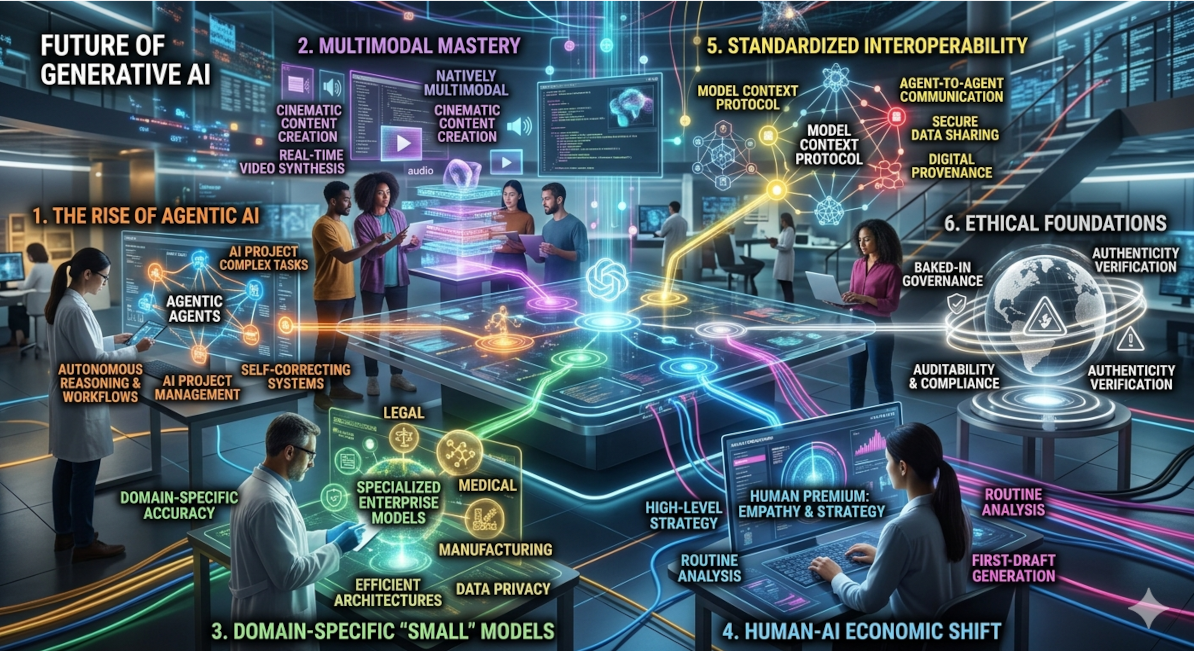
The future of generative AI is transitioning from a period of "novelty and hype" into an era of deep, structural integration. As we look toward the late 2020s, the technology is evolving from simple chatbots into sophisticated agentic systems
Software development has always evolved alongside new tools and technologies. From assembly language to high-level programming languages, from manual coding to frameworks and low-code platforms, each advancement has aimed to make building software faster and more accessible.
Today, Generative
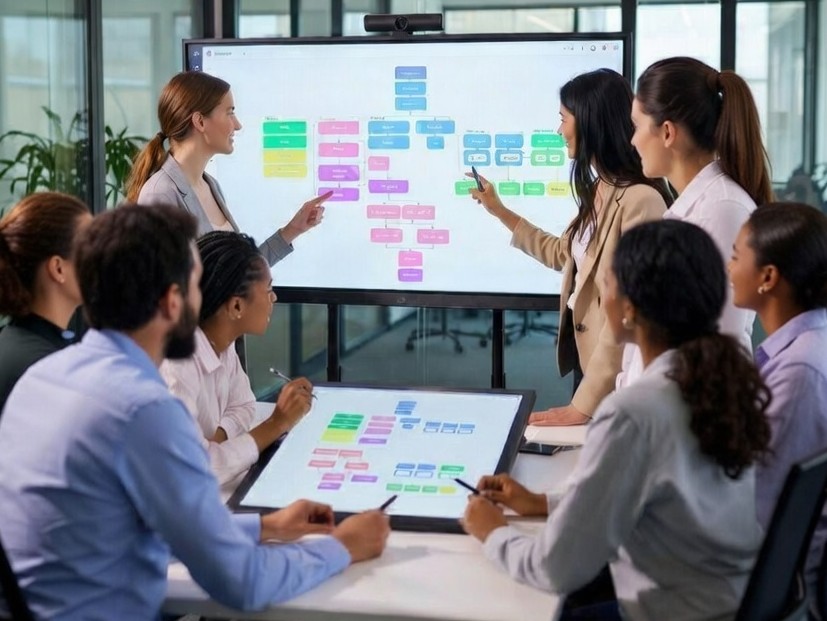
The first thing Mira noticed about the new platform wasn’t the drag-and-drop interface or the pastel-colored buttons. It was the silence.
No frantic typing. No late-night arguments about semicolons. No one muttering curses at a compiler.
Just ideas—moving.
Mira
No-code and low-code platforms have rapidly transformed the software development landscape by making application creation faster, more accessible, and less dependent on traditional programming skills. These platforms use visual interfaces, drag-and-drop components, and pre-built templates to allow users to
© Glomex Technologies. All Rights Reserved.