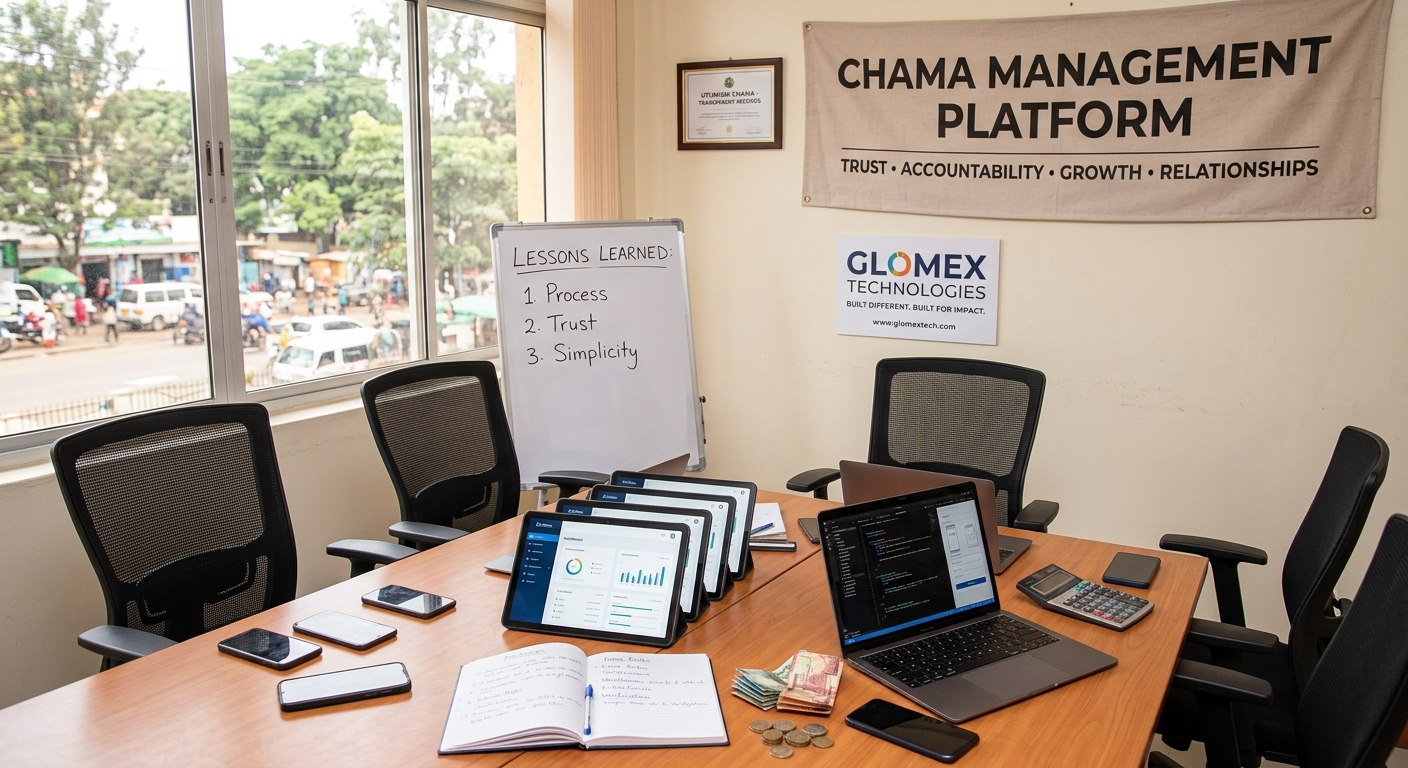
Building a Chama Management Platform is more than creating software for contributions and records. Chamas are built around trust, accountability, relationships and shared financial goals. When we set out to build a digital platform for managing these groups, one of the biggest lessons was that technology must first understand how people actually work before attempting to automate their processes.
Technology Must Follow the Real-World Workflow
One of our earliest lessons was that successful software starts with understanding the business process. A typical Chama may involve member registration, regular contributions, meetings, loans, repayments, fines, investments and financial reporting. Each group can also have its own rules and operating practices.
Instead of forcing these processes into a rigid system, the platform needs to provide enough flexibility to support different Chama structures while maintaining clear financial records. The technology should adapt to the group, not the other way around.
Trust Is a Core Feature
When software handles money, trust becomes just as important as functionality. Members need confidence that contributions are recorded correctly, transactions can be traced and financial information is protected.
This means features such as transaction histories, clear reporting, audit trails, controlled permissions and transparent records are not simply technical additions. They are fundamental to the user experience.
A platform can have a beautiful interface, but if members cannot confidently answer “Where did this money come from, and where did it go?”, the system has failed at one of its most important responsibilities.
Simplicity Matters
Financial management systems can quickly become complicated. However, most members do not want to navigate a complex accounting application just to check their contributions or loan balance.
One of our key lessons was the importance of presenting complex processes in simple ways. Members should be able to quickly understand their contributions, outstanding loans, repayments, group balances and other important information without needing technical or accounting knowledge.
The complexity should exist behind the system—not in front of the user.
Automation Creates Real Value
A significant opportunity in Chama management is reducing repetitive administrative work. Contributions, loan calculations, repayment schedules, reminders, statements and reports can consume considerable time when handled manually.
Automation allows the platform to take care of routine processes while administrators focus on managing the group and making decisions. This not only saves time but also reduces the possibility of human error.
Security Cannot Be an Afterthought
A Chama platform can contain sensitive personal and financial information, making security a fundamental part of its architecture. User authentication, role-based access, secure data handling, audit trails and controlled permissions need to be considered from the beginning.
Different users should only have access to the information and functionality relevant to their responsibilities. Strong security helps protect both the financial information managed by the platform and the trust between members.
Reporting Turns Data Into Decisions
Recording transactions is only one part of the problem. The real value comes from being able to understand what the data means.
Clear financial reports can help members understand contribution performance, loan activity, repayment trends, group balances and overall financial progress. Good reporting transforms a collection of transactions into information that members can use when making decisions about their group.
Build for Growth
A platform that works for one small Chama may eventually need to support many groups, thousands of members and significantly larger volumes of transactions. Scalability therefore needs to be considered from the beginning.
The architecture should be capable of supporting additional members, groups, financial products, integrations and reporting requirements without requiring the entire system to be rebuilt.
The Biggest Lesson
Perhaps the biggest lesson from building a Chama Management Platform is that good technology is ultimately about people.
The platform is not simply a digital replacement for notebooks, spreadsheets or manual records. It is a tool designed to strengthen transparency, simplify administration and help groups manage their collective financial goals more effectively.
At Glomex Technologies, we approach solutions like this by starting with the people, processes and problems before choosing the technology. The result is software that is not only functional, but practical, scalable and aligned with how organizations actually operate.
Build around the workflow. Design around the user. Engineer for trust.
Glomex Technologies — Built Different. Built for Impact.
Share this post
Know someone who'd enjoy reading Lessons From Building a Chama Management Platform?