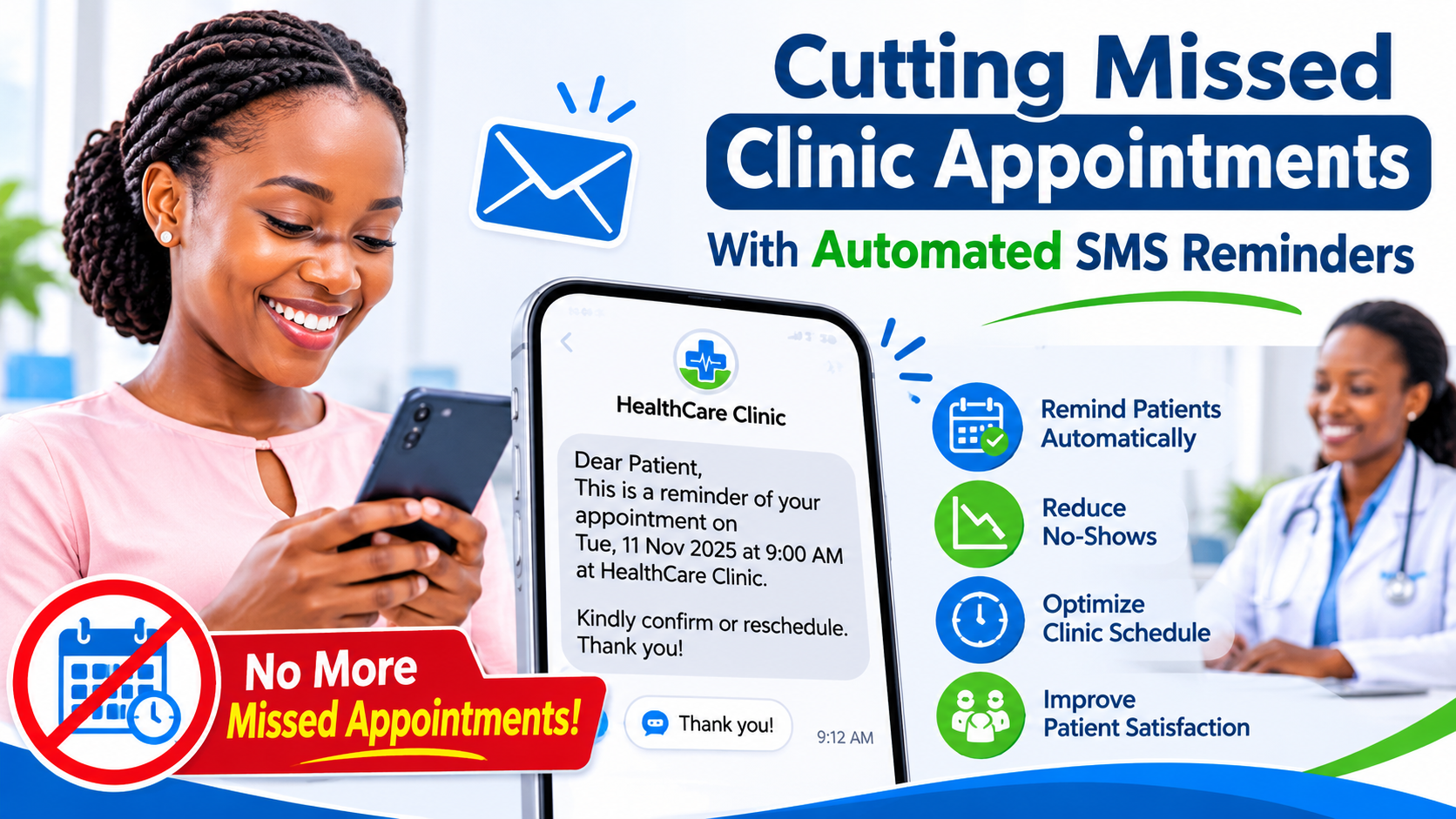
Every clinic manager knows the pattern. The morning list is full and the doctor is ready, but by mid-morning several patients simply have not turned up. Some forgot. Some confused the date. Some meant to call and cancel but never did. Meanwhile, other patients who wanted an earlier slot were told the diary was full.
Missed appointments are one of the quietest drains on a healthcare facility. They rarely make headlines, but they waste clinician time, disrupt follow-up care and make planning harder. The good news is that much of the problem comes down to communication, and communication is something a well-designed system can handle reliably.
Why patients miss appointments
Before reaching for a solution, it helps to be honest about the causes. In most Kenyan clinics and hospitals, missed appointments come from a handful of familiar reasons:
- Simple forgetting. A review booked two or three weeks ahead is easy to lose track of, especially when the only record is a handwritten card.
- Unclear instructions. Patients may not know they need to fast, bring previous results or arrive early for a procedure, so they turn up unprepared or decide not to come.
- No easy way to cancel. If cancelling means queuing on the phone line or travelling to the facility, many people just stay away.
- Changing circumstances. Work, transport, money or family needs shift, and the appointment slips down the list.
- Lost contact details. Phone numbers written incorrectly at registration mean the clinic cannot reach the patient even when it tries.
Notice that most of these are not about patients being careless. They are about the facility not having a dependable, low-effort way to stay in touch.
What missed appointments actually cost
The obvious cost is an empty slot. A doctor, nurse or physiotherapist sits idle while overheads continue. But the hidden costs are often larger:
- Broken continuity of care. A diabetic or hypertensive patient who misses a review may go months without their medication being adjusted.
- Longer waits for everyone else. Slots that could have gone to other patients are wasted, pushing the backlog further out.
- Staff time spent chasing. Reception teams make manual calls, often from personal phones, with no record of who was reached.
- Poor planning data. Without knowing who will really attend, it is hard to schedule staff, theatre time or lab capacity sensibly.
Why SMS works so well in the Kenyan context
Not every patient has a smartphone or reliable data, and not everyone uses the same messaging apps. Plain SMS reaches almost any mobile phone, from the most basic handset upwards, in town and in rural areas alike. Patients are already used to receiving SMS from M-Pesa, banks and service providers, so a short message from their clinic feels natural.
SMS is also easy to read at a glance, does not require the patient to install anything and can be sent in English, Kiswahili or another language your patients prefer.
What a good reminder system looks like
Sending a single bulk message the night before is better than nothing, but a properly designed reminder system does far more. Here is what we recommend facilities look for.
1. Reminders tied directly to the appointment diary
Reminders should be generated automatically from the booking itself, not typed out by hand. When an appointment is created, moved or cancelled in your hospital management system, the reminder schedule should update with it. That removes the risk of sending the wrong date or reminding someone about a slot that no longer exists.
2. Sensible timing
A common approach is a confirmation when the booking is made, a reminder a few days before and a final nudge the day before or on the morning. The right pattern depends on the service: a dental check-up, an antenatal visit and a surgical admission all need different lead times.
3. Clear, useful content
A good message tells the patient exactly what they need and nothing more:
- The facility name and department
- Date, time and, where helpful, the clinician
- Any preparation, such as fasting or bringing previous results or an insurance or SHA card
- How to confirm, cancel or reschedule
Keep it short and avoid sensitive clinical details. A reminder should never reveal a diagnosis to anyone who happens to glance at the phone.
4. Two-way replies
The biggest improvement comes when patients can respond. A simple reply such as 1 to confirm, 2 to cancel lets the system mark attendance automatically and free up cancelled slots for patients on a waiting list. Reception staff can then focus their calls on the few patients who have not replied at all.
5. Follow-up for missed visits
When someone does miss an appointment, the system can send a polite message offering to rebook. For chronic care, immunisation schedules or post-operative reviews, this follow-up can matter as much as the original reminder.
6. Clean contact data
Reminders only work if numbers are correct. Registration screens should validate phone formats, allow an alternative contact such as a guardian or next of kin, and flag numbers that repeatedly fail to deliver so staff can update them at the next visit.
Getting the privacy side right
Health information is sensitive, and patients need to trust that their clinic handles it carefully. Practical safeguards include asking for consent to receive SMS at registration, keeping message content neutral, restricting which staff can edit message templates and keeping a record of what was sent and when. If your facility is unsure what its obligations are under Kenyan data protection requirements, it is worth getting proper advice before launching any patient messaging.
Beyond reminders: other uses for clinic SMS
Once the messaging foundation is in place, facilities often extend it to:
- Notifying patients that lab results are ready for collection
- Prompting refills for patients on long-term medication
- Reminding parents about upcoming immunisation doses
- Sending payment confirmations after an M-Pesa transaction at the cashier
- Announcing outreach clinics, screening days or changes to opening hours
Each of these uses the same building blocks: accurate patient records, a reliable SMS gateway and rules that decide who receives what and when.
Starting small and building up
You do not need to transform everything at once. A practical path is to start with one department that struggles with no-shows, such as a specialist clinic or physiotherapy, switch on automated reminders and two-way confirmation, and track attendance before and after. Once staff are comfortable and the results are clear, roll it out across other services.
If your facility already uses a hospital management system, SMS reminders can often be integrated with it. If you are still working from paper diaries or spreadsheets, reminders can be part of a wider move to digital appointments, records and billing.
Let us look at your clinic's situation
At Glomex Technologies we build hospital management systems and bulk SMS solutions designed for how Kenyan healthcare facilities actually work, including M-Pesa payments, local languages and patients on basic phones. Whether you run a single clinic or a multi-department hospital, we are happy to talk through where your appointments are slipping and what a practical reminder setup could look like for you. Get in touch and tell us about your facility.
Share this post
Know someone who'd enjoy reading Cutting Missed Clinic Appointments With Automated SMS Reminders?