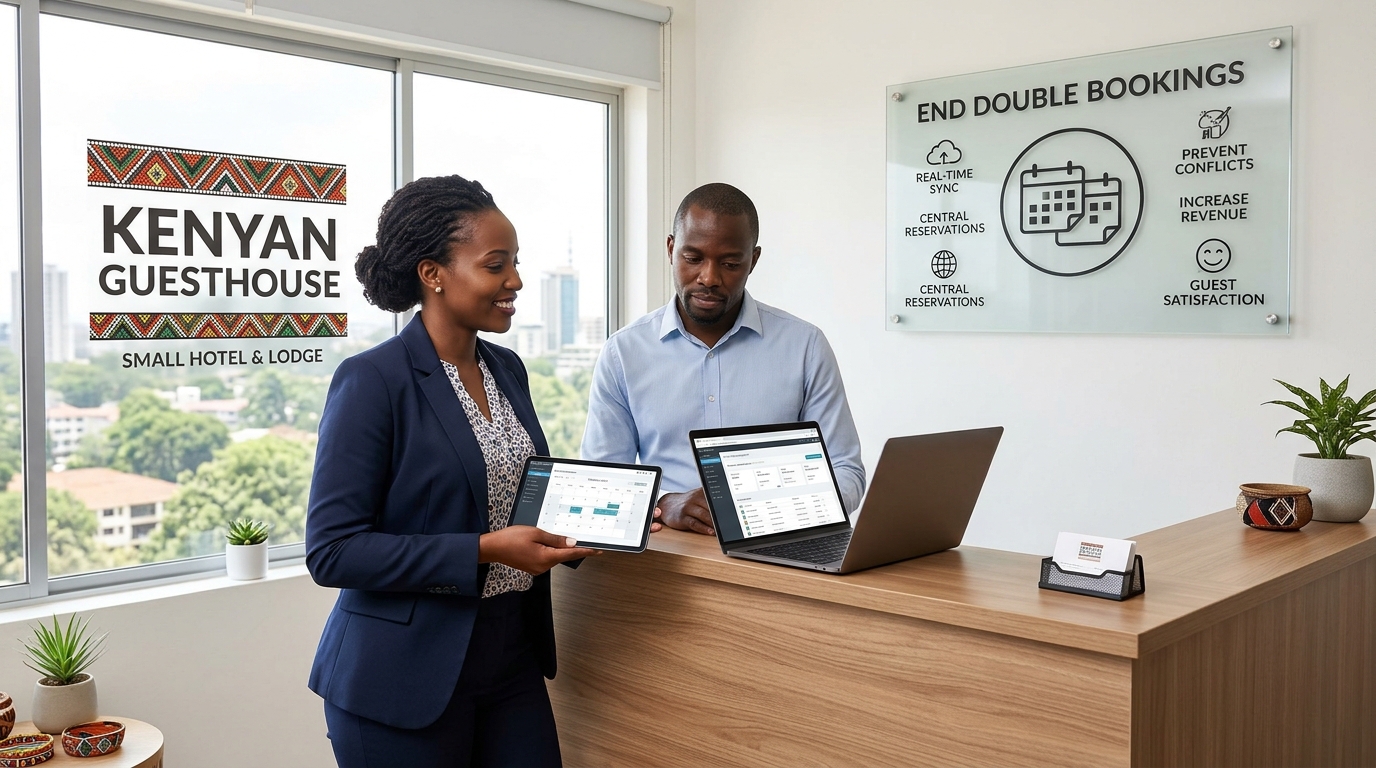
A guest arrives at reception after a long drive from Nairobi, phone in hand, showing a WhatsApp confirmation for a deluxe room. The receptionist checks the booking book and finds that the same room went to a walk-in guest an hour ago. Someone gets upgraded, someone gets downgraded, and someone writes a review you would rather not read.
For guesthouses, lodges, boutique hotels and serviced apartments across Kenya, double bookings are rarely about careless staff. They happen because reservations arrive through too many doors, and nobody has one reliable view of what is actually available. This post looks at where the confusion comes from and what a simple, well-built system changes.
Why double bookings keep happening
Bookings arrive from everywhere
A typical small property in Naivasha, Diani or Nanyuki takes reservations through several channels at once:
- Calls and WhatsApp messages to the manager's personal phone
- Direct messages on Facebook and Instagram
- Online travel agencies and listing sites
- Tour operators and travel agents booking on behalf of clients
- Walk-in guests at the front desk
- Corporate clients sending emails for conferences and retreats
Each channel has its own record. The manager remembers a WhatsApp booking, the night receptionist logs a walk-in in the book, and an online listing still shows the room as free because nobody updated it. The overlap is only discovered when two guests are standing at the same door.
Deposits are hard to match to bookings
Most guests pay deposits by M-Pesa, often to a till or paybill, sometimes to a staff member's phone. The confirmation SMS says who paid and how much, but not which booking it was for. When a guest says they paid last week, someone has to scroll through messages to find the transaction. Unconfirmed deposits lead to rooms being held for guests who never come, or released to others while a paying guest is on the way.
Room status lives in people's heads
Housekeeping knows which rooms are cleaned. Maintenance knows the shower in room six is broken. Reception knows who checked out early. If this information is not shared in one place, the front desk can sell a room that is not ready, or turn away a guest when a room is actually free.
What good reservation management looks like
You do not need the software of an international hotel chain. Smaller properties need a few things done well.
One calendar that every channel feeds into
The heart of the solution is a single availability calendar. Whether a booking comes from WhatsApp, a walk-in, an agent or your own website, it is entered into the same system, and that room is immediately blocked for those dates. Where your listing sites support it, availability can sync automatically so that a room sold at the front desk disappears from online listings without anyone remembering to update them.
Direct bookings on your own website
A booking page on your own website lets guests see real availability, choose a room and pay a deposit without waiting for someone to reply to a message at midnight. It also means fewer commissions paid to third parties on guests who would have found you anyway. Your staff spend less time answering the same questions about rates and dates.
M-Pesa deposits matched automatically
When payments are integrated properly, a guest pays through an STK push prompt or a paybill with the booking reference as the account number. The system records the payment against the right reservation and marks it as confirmed. Staff no longer need to forward screenshots, and the manager can see at a glance which bookings are secured and which are still pending.
Automatic confirmations and reminders by SMS
Once a deposit is received, the guest gets an SMS confirming the room, dates and balance due. A reminder a day or two before arrival, with directions and check-in time, cuts down on calls asking how to find you. If a booking is unpaid by an agreed deadline, the system can flag it so staff can follow up or release the room deliberately rather than by accident.
Live room status for the whole team
Housekeeping marks rooms as cleaned or out of order from a phone. Reception sees the change instantly. Checking a guest in early or handling a late arrival becomes a simple look at the screen rather than a walk around the compound.
Beyond bookings: the rest of the guest's stay
Once reservations are under control, the same system can tie together other parts of the operation that often leak money:
- Guest folios: restaurant meals, bar tabs, laundry and activities charged to the room, so nothing is forgotten at checkout.
- Point of sale integration: the restaurant and bar till posts directly to the guest's bill instead of relying on paper chits.
- Corporate and group bookings: conferences and weddings booked as a block, with invoices that a company's finance team can actually process.
- Reports for the owner: occupancy, revenue by channel and outstanding balances, viewable even when the owner is not on site.
For owners who manage the property from another town, that last point matters. Being able to see today's arrivals, payments and occupancy from your phone removes much of the anxiety of running a hospitality business at a distance.
Where AI fits, and where it does not
Practical AI can help a small property without replacing the human warmth guests come for. A well-designed assistant on WhatsApp or your website can answer routine questions about rates, availability, meal plans and directions at any hour, and hand over to staff when a guest has a special request. AI can also help summarise guest feedback so you notice recurring complaints about a particular room or service.
What AI should not do is make final decisions about pricing exceptions, refunds or complaints without a person involved. Guests remember how a problem was handled, and that is still a human job.
Getting started without disrupting operations
Switching systems in the middle of a busy season is risky. A sensible approach usually looks like this:
- Map your channels. List every way bookings currently reach you and who handles each one.
- Set up rooms and rates. Enter room types, seasonal rates and policies such as deposits and cancellations.
- Load existing bookings. Move all future reservations from books and phones into the new calendar.
- Connect payments and SMS. Link your till or paybill and test confirmations end to end.
- Train the team. Reception, housekeeping and management each need a short, role-specific walk-through.
- Go live in a quieter period, then add website booking and channel sync once the basics are steady.
The key rule during transition is simple: from day one, no booking is confirmed unless it is in the system.
Talk to Glomex about your property
Every guesthouse and hotel runs a little differently. Some need a full property management system with restaurant and bar integration, others just need a reliable calendar, a booking website and M-Pesa deposits that confirm themselves. At Glomex Technologies we build hospitality systems with M-Pesa payments, SMS and practical AI built in, shaped around how your team actually works.
If double bookings, unmatched deposits or scattered guest records are costing you time and goodwill, get in touch. Tell us how bookings reach you today, and we will help you work out the simplest way to bring everything into one place.
Share this post
Know someone who'd enjoy reading Ending Double Bookings at Kenyan Guesthouses and Small Hotels?